

Aesthetic reconstruction or filling
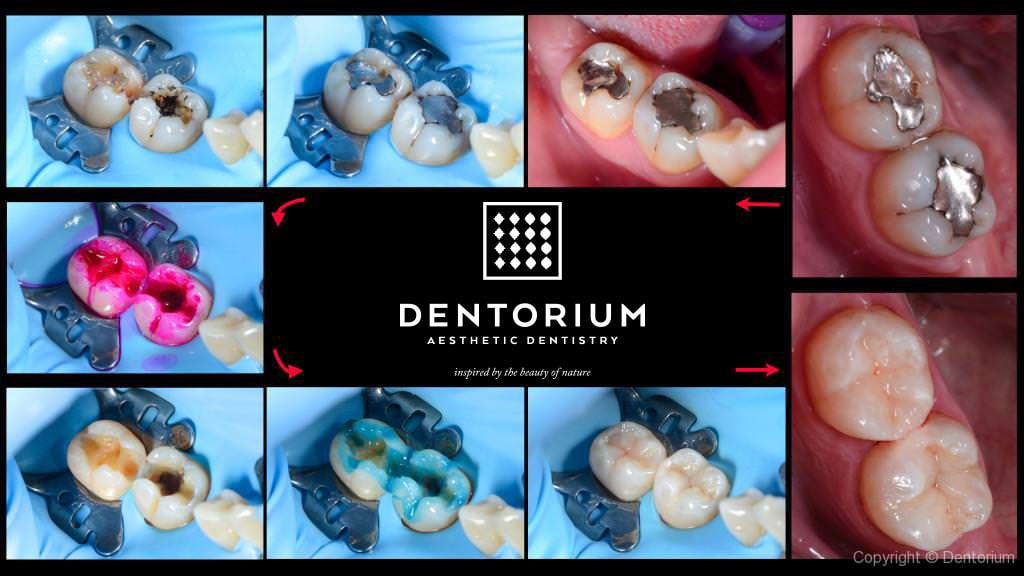
The picture shows the replacement of amalgam fillings, under which our patient developed caries. We have isolated the working field with the cofferdam technique, cleaned the caries and reconstructed tooth structure. For this case, patient had only one visit.
What are aesthetic reconstructions?
Aesthetic reconstruction is in essence a process of copying the morphology and color of the tooth. For functional reasons it was not enough to only fill the hole (cavity) with the composit material.
What causes tooth decay?
Dental caries is caused by bacteria in plaque that blunts teeth enamel. Regular clearing of dental plaque is an ideal prevention of plaque decay and further cavity development.
If left unattended, cavity travels to dentin, (sensitivity to hot, cold, sweet), and then into the nerve (usually accompanied by inflammation and pulsating pain). If you do not treat your tooth in time, you will eventualy lose it.
When to act?
As soon as possible. Think about it. It’s important to completely remove cavity from enamel, which means, the bigger the cavity, the bigger the destruction.
Even though it is possible to restore the tooth with composite materials, if the proportion of artificial material is more than 70%, the suggestion is to cover it with a dental crown.
Regular checkups serve precisely for timely detection and prevention of cavity spreading. “Just do it.”
Amalgam fillings
In tooth restoration amalgam is mostly used because of low price, easy application, durability and bacteriostatic effects.
But, modern dentistry has advanced considerably in our awareness of heavy metals effects on human health and pollution of the environment.
In addition to aesthetic defects, amalgam or black fillings have proven harmful effects.
They contain mercury compound with other materials such as copper, tin, zinc that render mercury inert. However, studies show that people with amalgam fillings have 4-6 times higher concentration of mercury in the breath than a person without them.
Mercury builds up in lungs, kidneys, liver and stomach, concentrates in the pituitary gland, adrenal glands, and lymph nodes. Its adverse effects are associated with neurological, urinary and digestive disorders.
If you still have amalgam fillings, our advice is to gradually replace them.
What is important in filling?
We want to keep as much of natural tooth structure, functionality, aesthetics and durability of the teeth. If well designed, with proper hygiene, fillings can last long.
Regular dental plaque clensing is a way of maintaining of dental fillings.
The biggest drawback of inadequate white fillings is the place where tooth and filling come together. That is the place where bacteria can come through and create more cavity.
Protocol of aesthetic reconstruction in Dentorium dental studio
Cofferdam perfectly isolates saliva from the mouth and moisture that comes from the lungs, one of the most important factors that affect the quality of the reconstruction of teeth.
For the patient this means shorter repair time, a smaller number of anesthesia and treatments. It is easier, more comfortable for patient and dentist.
Cofferdam perfectly isolates saliva from the mouth and moisture that comes from the lungs, one of the most important factors that affect the quality of the reconstruction of teeth.
Today this technique is the only way to prevent amalgam dust to enter the body while grinding the tooth.
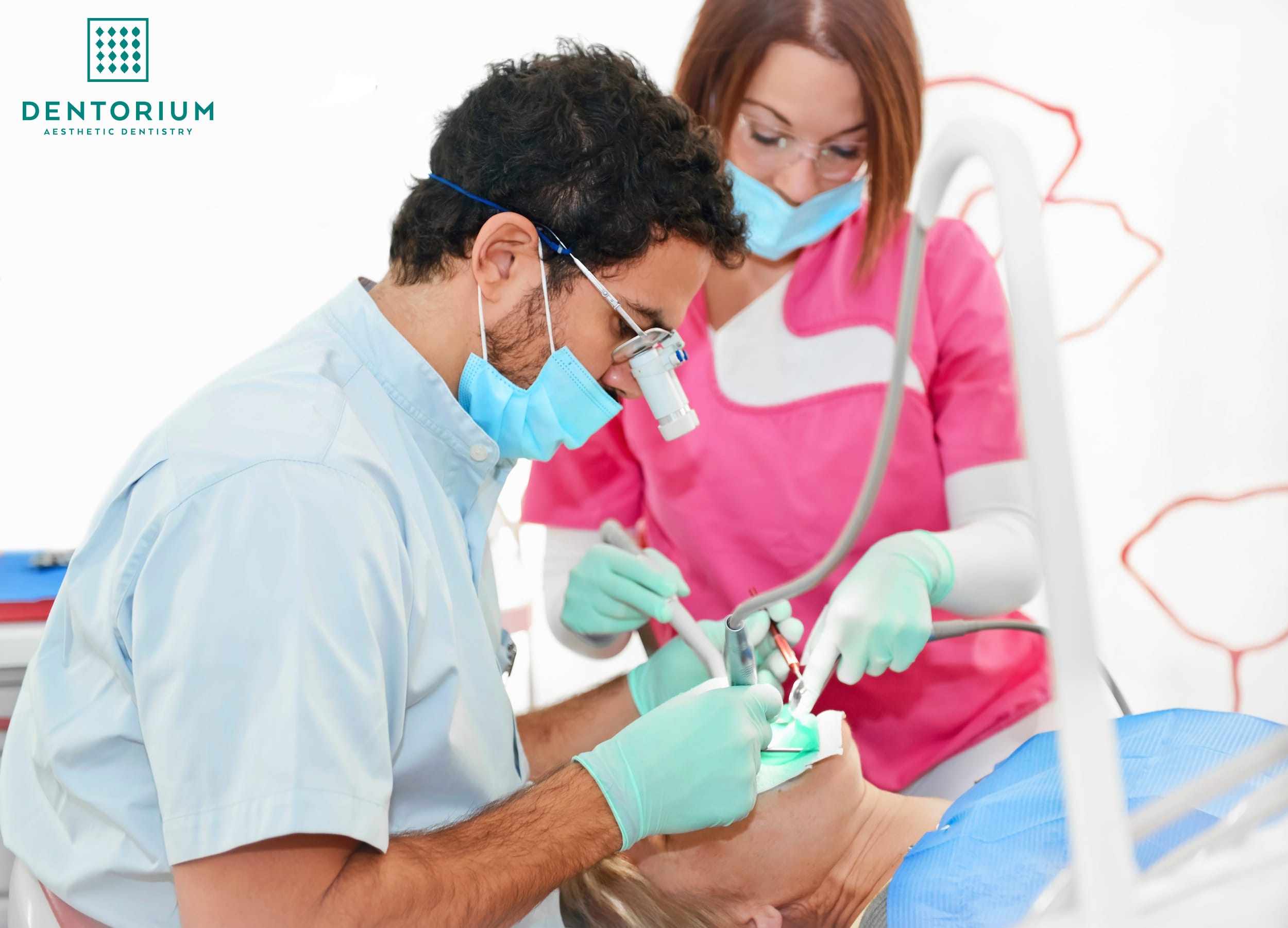
Once we get clear and clean working field, we remove the old seal, clean the cavity under and around the tooth. We control the cavity with our detector, an instrument that detects cavity via the color change.
With a well-removed caries, working field is the most important factor for the quality and longevity of the seal.
If you often change the filling, it means that one of these two factors is not met.
In aesthetic reconstruction of teeth, the goal is to fully copy the nature of tooth color and shape, where the fissure bumps are shaped with design brushes. In this way, the reconstruction fully satisfies the functional requirement of the upper or lower teeth contact.
With the materials we choose to use we follow the trend of modern dentistry.
We use a composite material with improved strength, color stability. It is reinforced with ceramic microbeads that improve polishing, aesthetics.
The end result is a tooth that is morphologically and functionally as close to the natural tooth as possible (cosmetic dentistry).
Visual photo communication follows every aspect of the work. Along with the procedure control, it eases and simplifies communication with the patient.
Contact us for more information.
Thank you.
With love,
Dentorium team
Share this with your friends: